
On this page
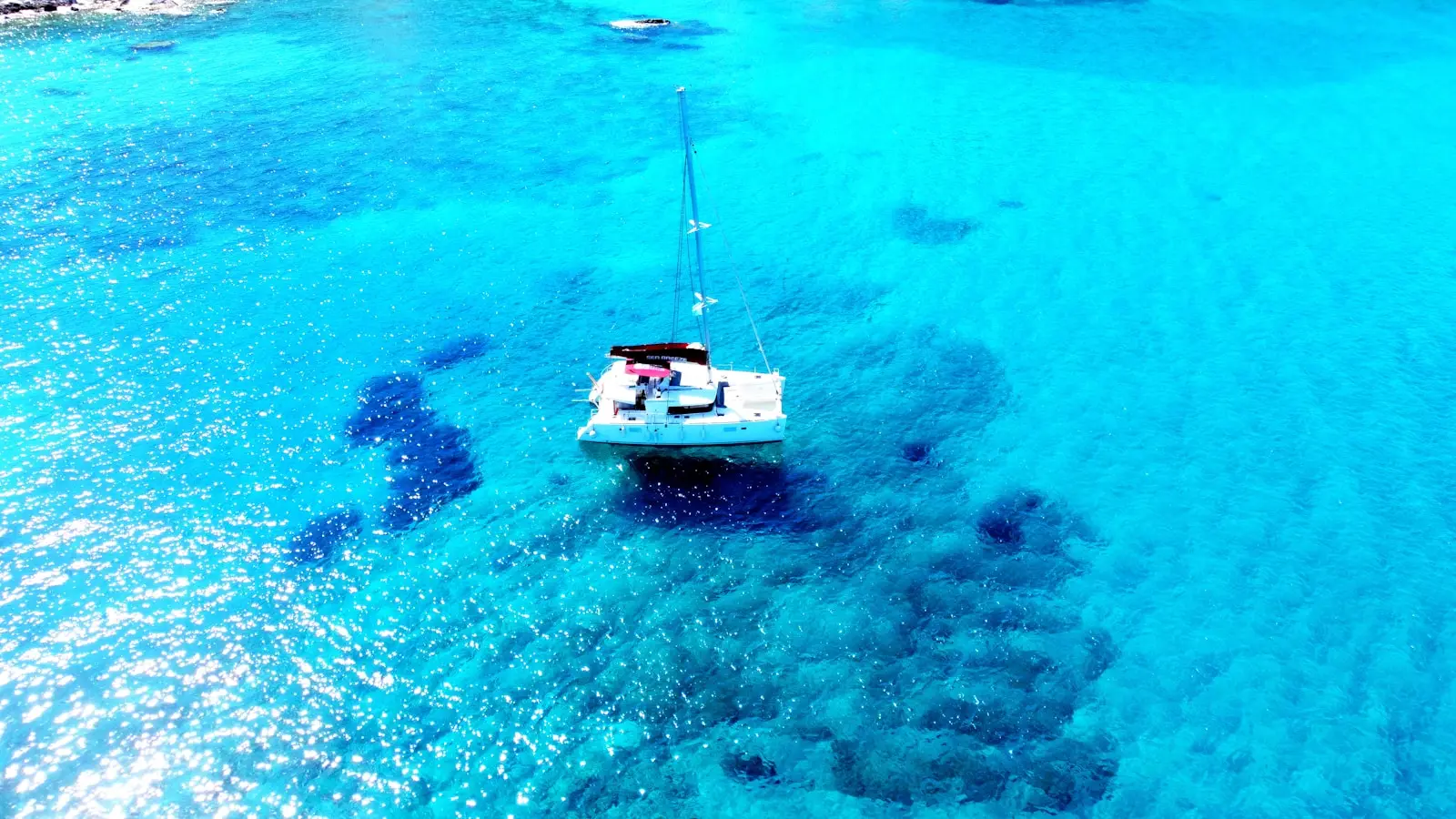
Lefkada is a good place to start sailing the Ionian for an unglamorous reason: the distances are short. Most legs are two or three hours, which means you arrive with the afternoon still ahead of you instead of at dusk, tired, looking for somewhere to tie up.
That is the whole argument for the southern Ionian. Not the scenery, which every charter area claims, but the arithmetic of a short passage and a sheltered bay at the end of it.
Why Lefkada works as a base
The island chain south and east of Lefkada shelters the water inside it. Summer wind is predictable — usually building through the afternoon and dropping in the evening — and you are rarely more than an hour from somewhere you could stop.
For a first charter that matters more than it sounds. It means a plan that goes wrong is an inconvenience rather than a problem, and it means a crew with mixed experience can sail together without anyone having a bad week.
Lefkas Marina sits a few minutes from Lefkada Town, so provisioning is straightforward, and you can leave the direction of the first day open until you see the forecast.
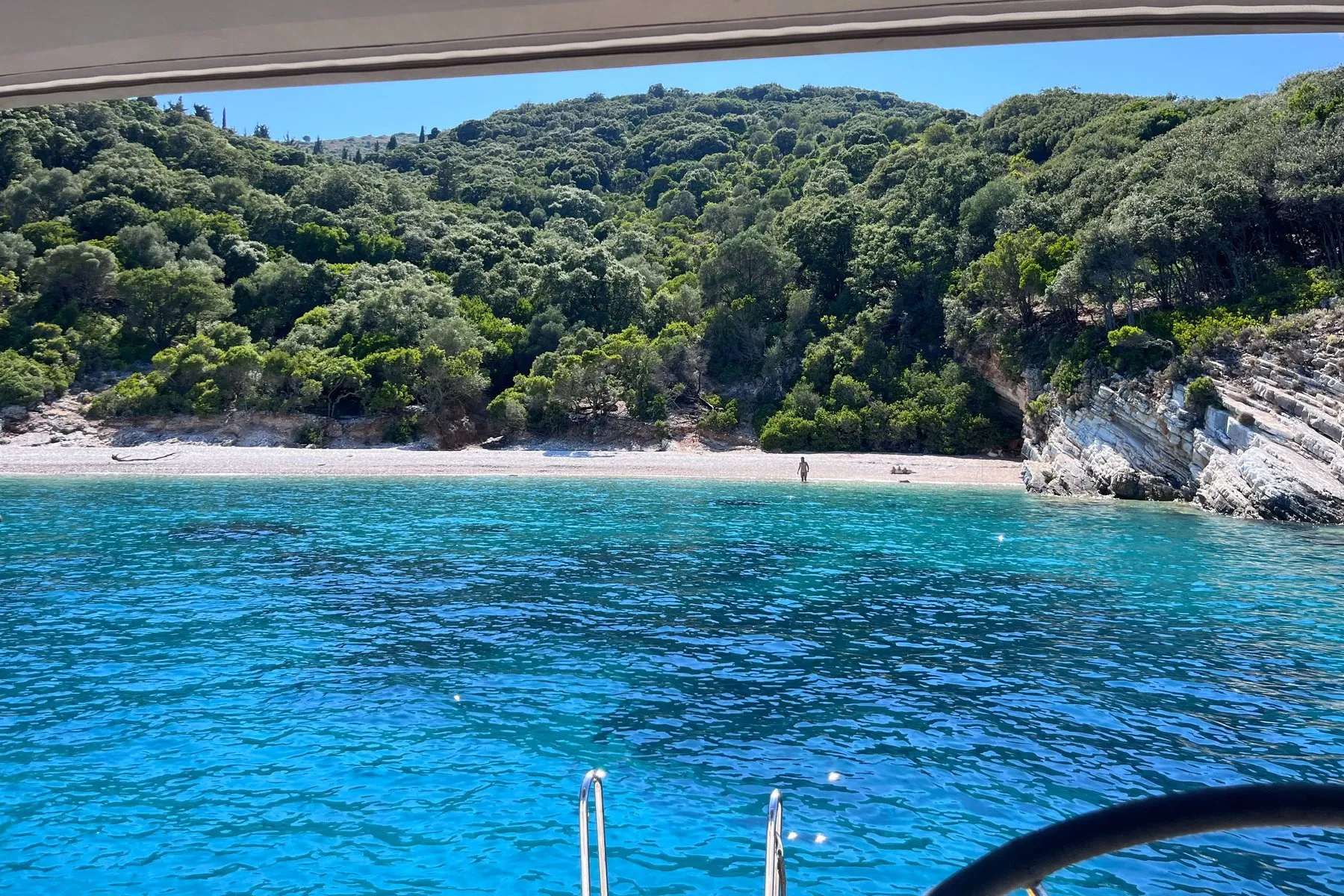
Beaches and anchorages worth planning around
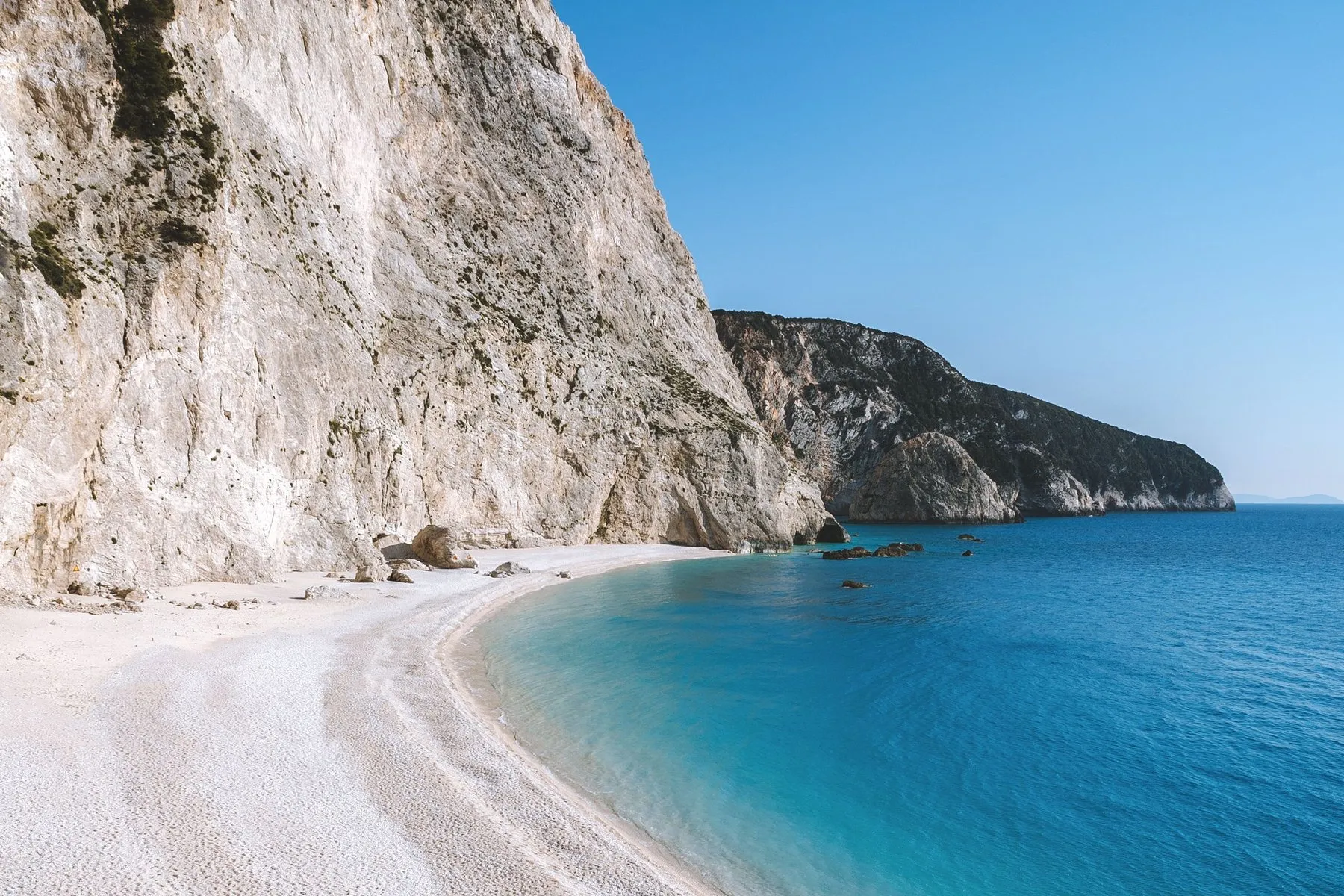
Porto Katsiki
The cliff-backed beach that appears in every photograph of the island. It is genuinely worth the detour, and it is better from the water than from the path above it. It is exposed, so treat it as a swim stop rather than a place to spend the night.
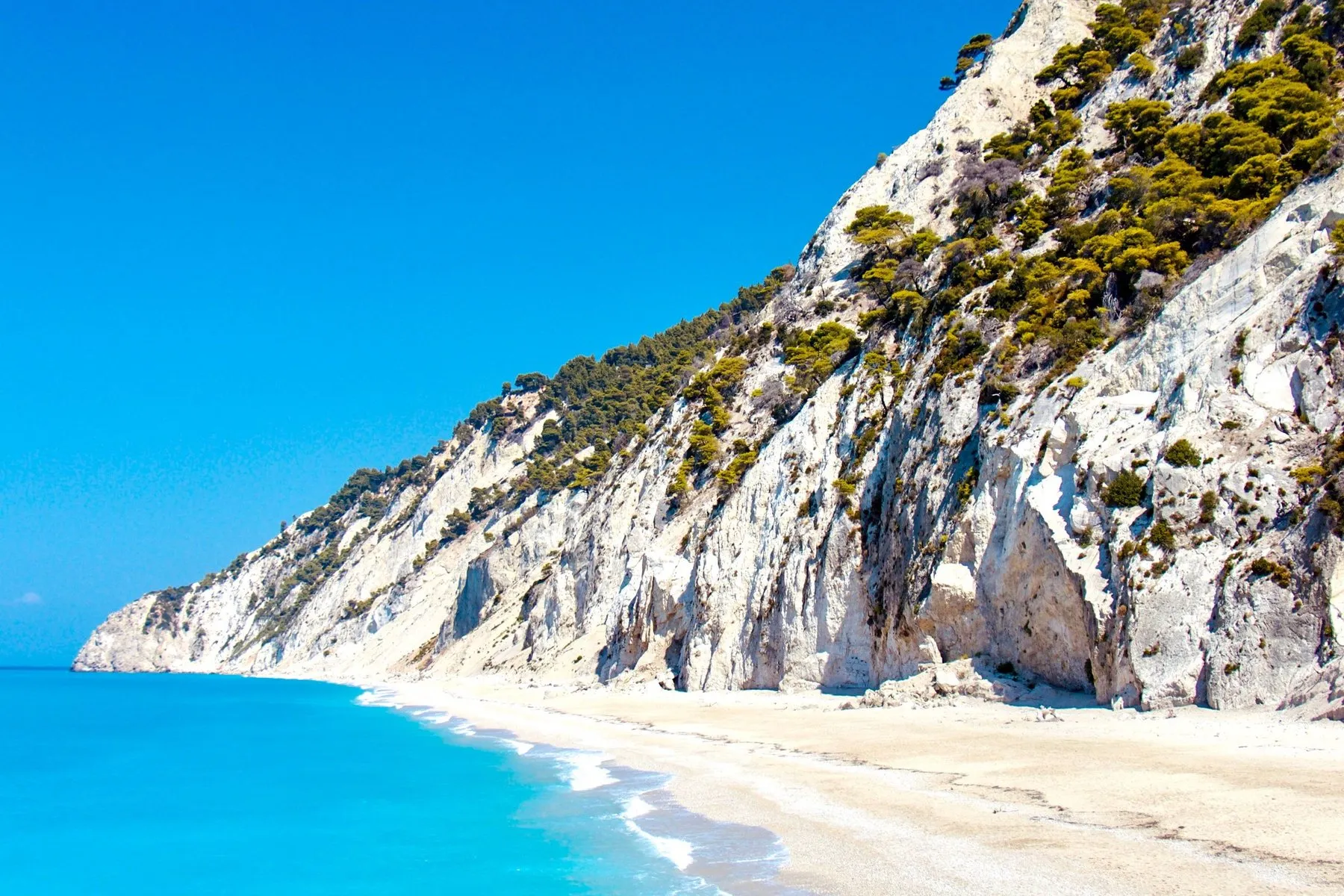
Egremni
Long, wild and usually quieter than Porto Katsiki. Worth timing for the morning, before the day boats arrive.
Nidri
The busiest harbour on the east coast and the practical one — tavernas, shops, and a good place to restock mid-week. It is a hub rather than a hideaway, which is exactly what you want on day four.
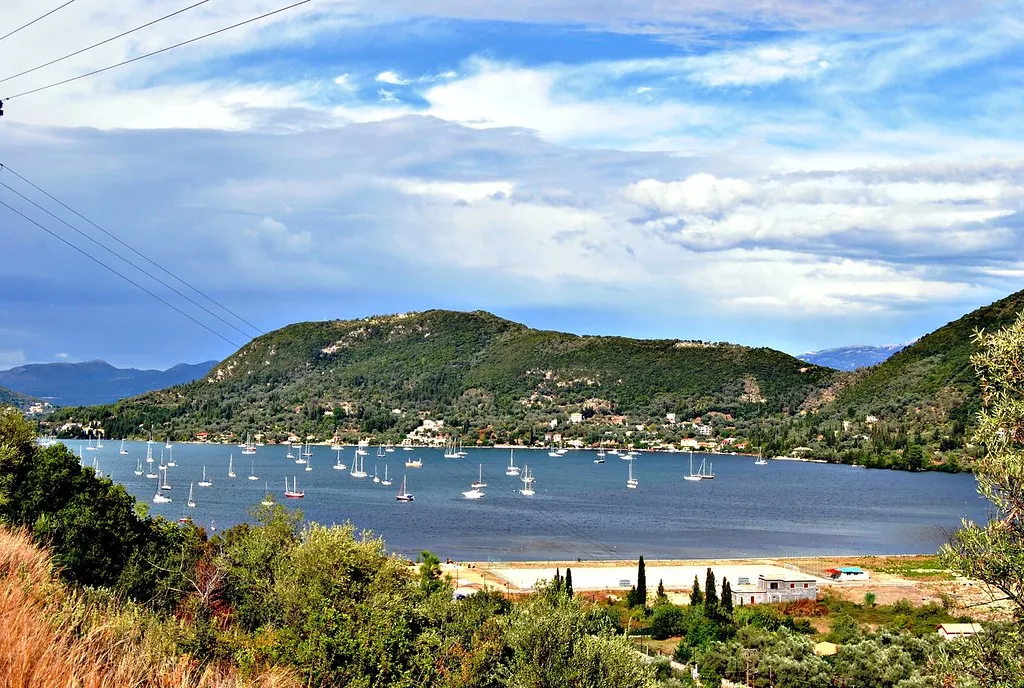
Vasiliki
On the south coast, and the windiest corner of the island by a distance — the afternoon thermal that makes it a windsurfing centre is the same one you will feel on the approach. Plan to arrive before it fills in, or enjoy the sail and accept a lively afternoon at anchor.
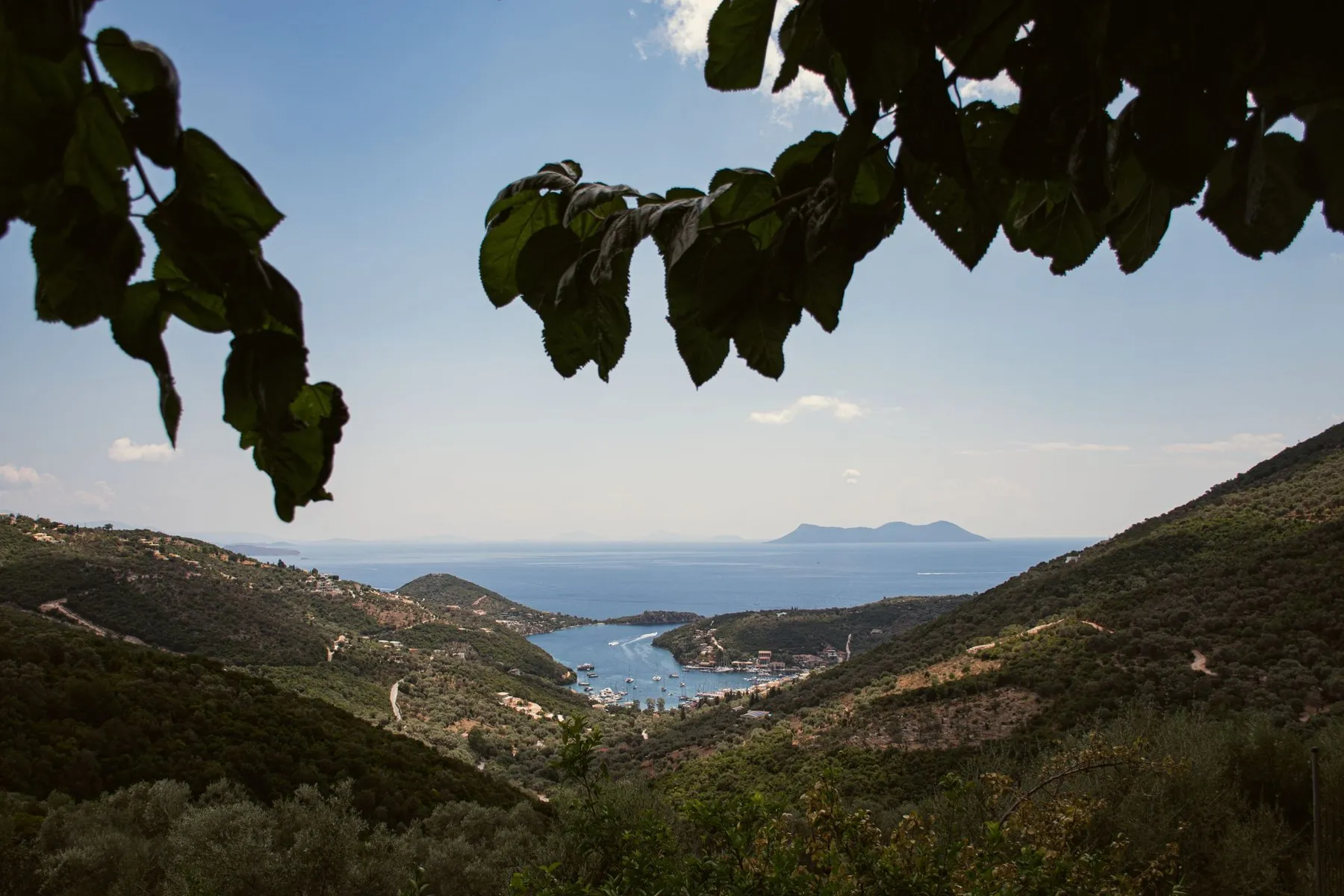
Sivota
A near-enclosed bay on the south coast, ringed with tavernas that will take your lines as you come in. One of the easiest overnight stops in the area and a favourite last night before returning to the marina.
Choosing an anchorage, and arriving well
A comfortable week has less to do with sailing fast than with arriving early. Some practical habits that make the difference:
- Leave early. Ports empty between eight and ten, and the best spots in the next bay go to whoever gets there first.
- Keep two backup bays in mind. Wind shifts, and a bay that was sheltered at noon can be uncomfortable by six.
- Aim to be anchored by mid-afternoon. More choice of spot, calmer water to set the anchor in, and time to swim before dinner.
- Have lines and fenders ready before you enter a harbour, not while you are in it.
In July and August this matters more, not less. The bays do not get bigger.
Island-hopping from Lefkada
Everything below is within a short hop, which is what makes a week here feel unhurried.
Meganisi
Twenty minutes from Nidri and a different pace entirely. Deep, calm inlets on the north coast, a handful of villages, and evenings that consist of one taverna and a walk. A favourite with families and with anyone whose idea of a holiday is doing very little.
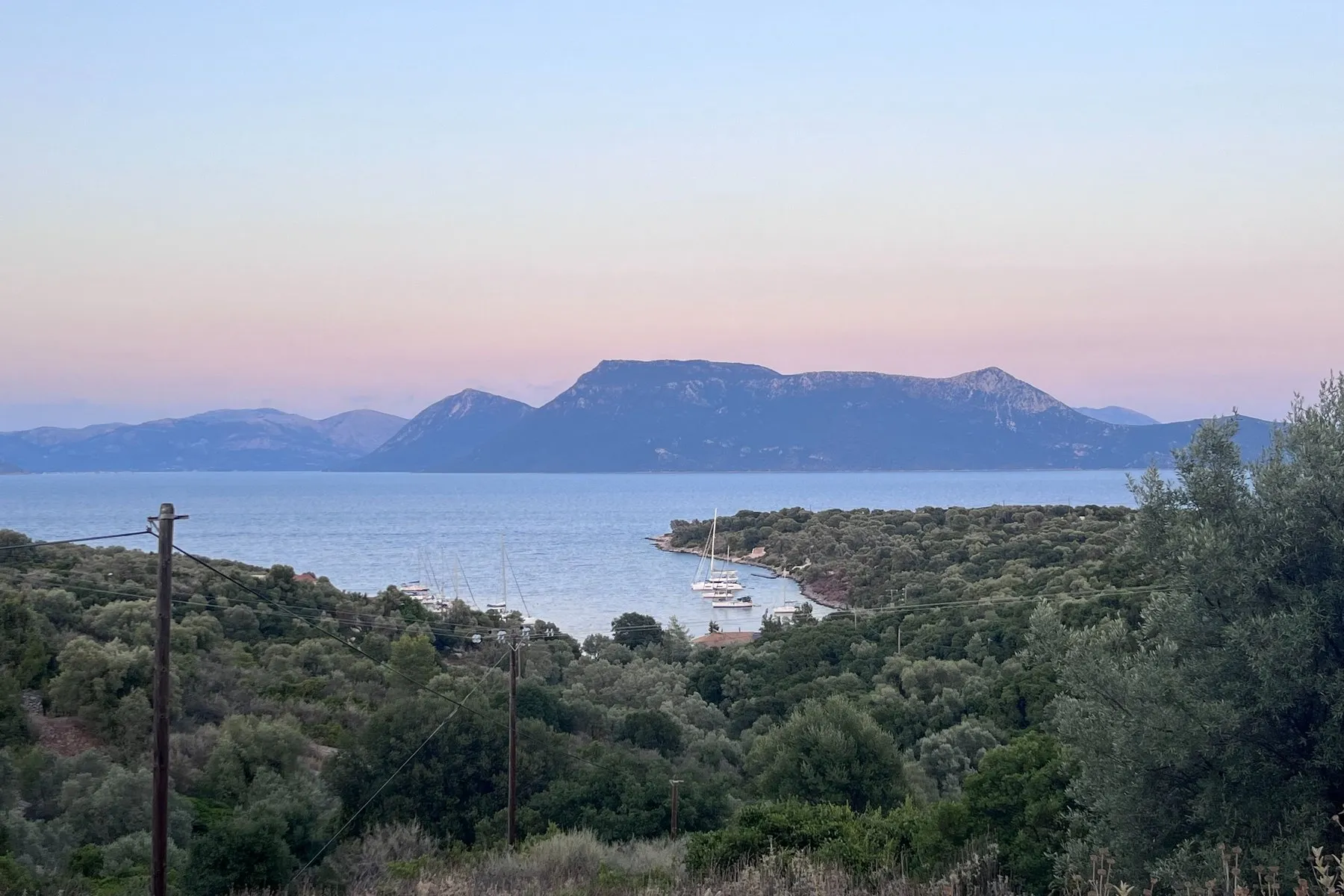
Kalamos
Quieter and more remote. The harbour is small and the mountain behind it is steep, which affects the wind on the approach more than people expect. Worth it for the sense of having gone somewhere.
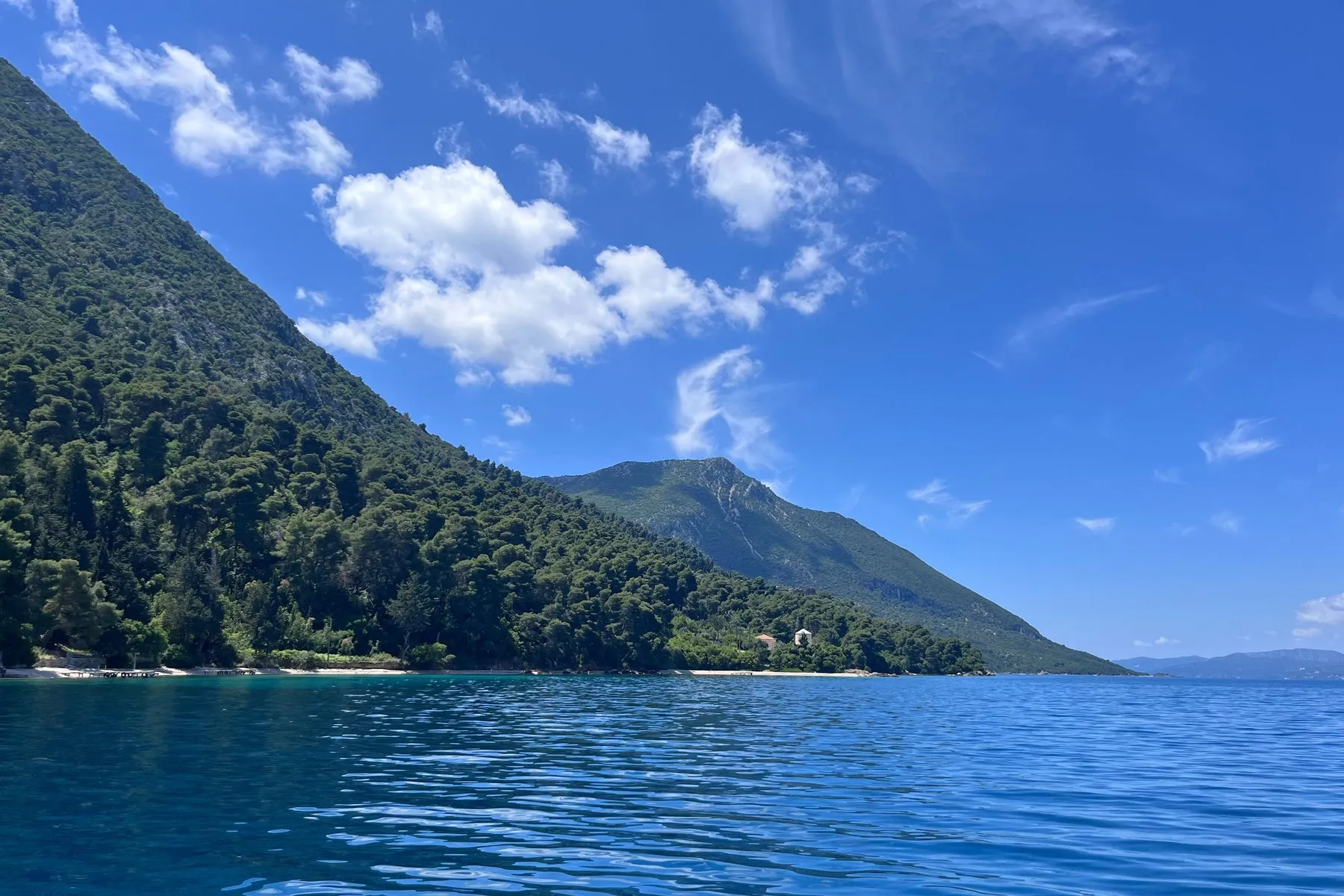
Kastos
The smallest of the group, with a single harbour and not much else. That is the appeal.
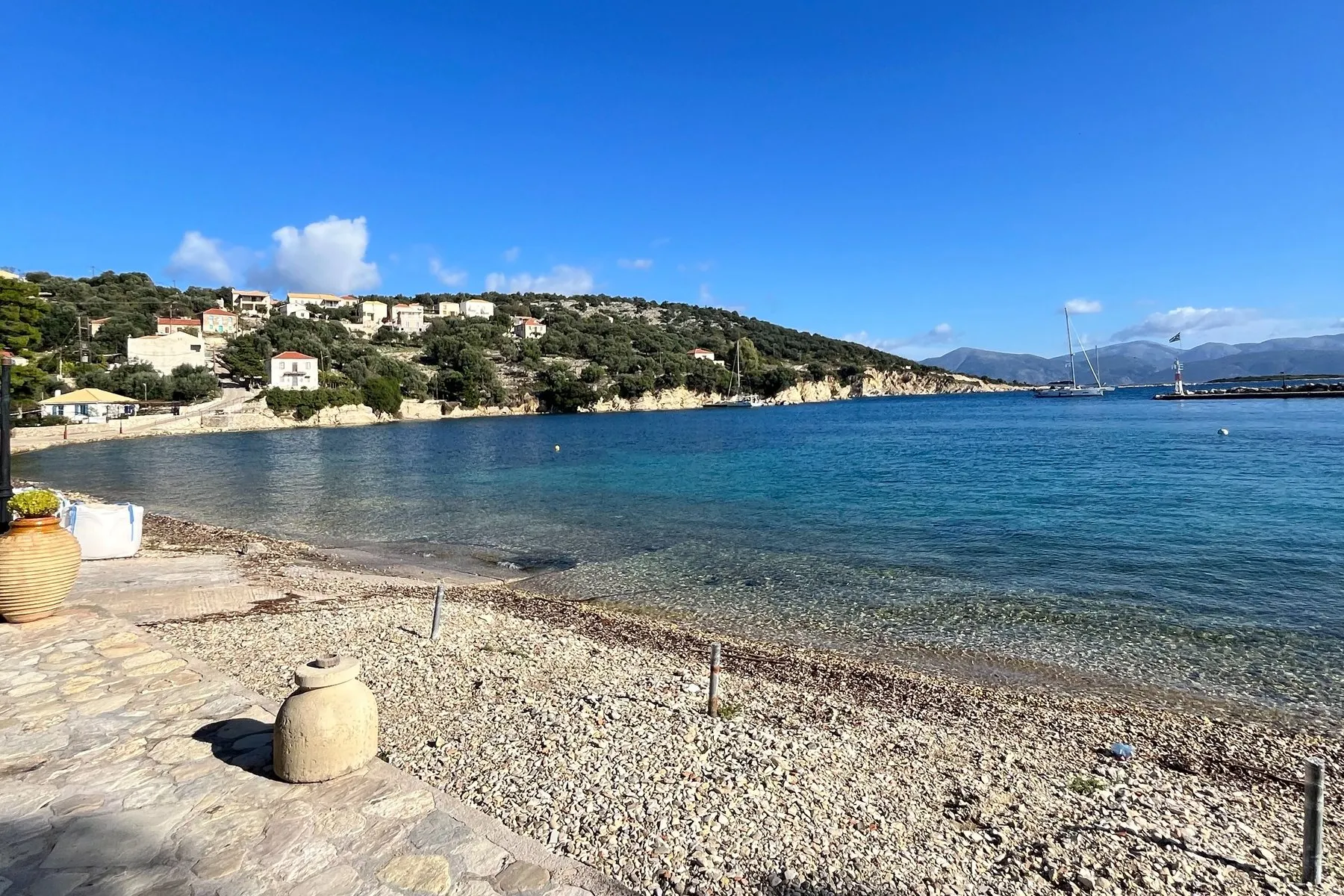
Ithaca
Atmospheric, and the one island guests read about before they arrive. Kioni and Vathi are both comfortable overnight stops and the sailing between them is easy.
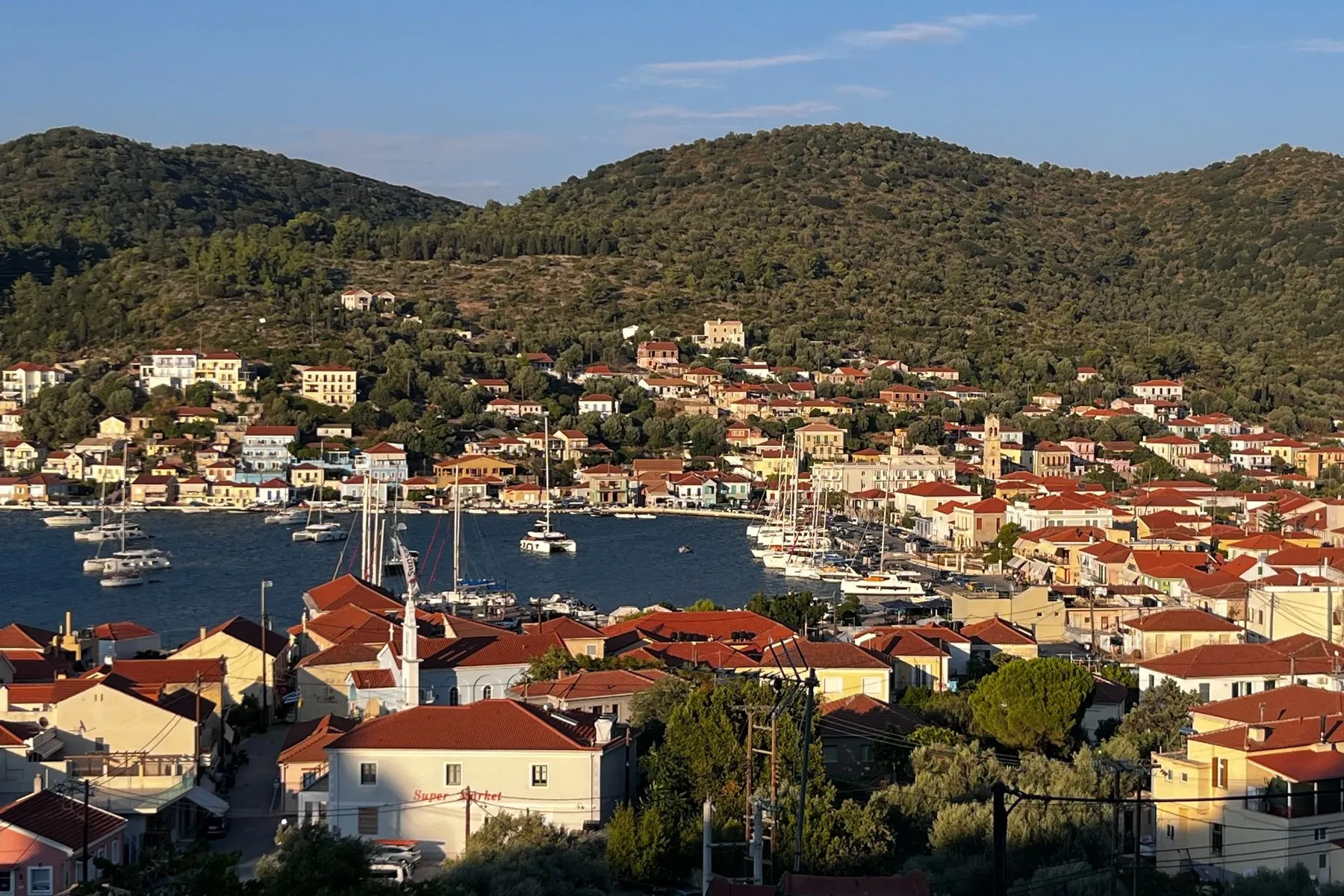
Kefalonia
Bigger, and the legs are longer. Fiskardo in the north is the usual stop — pretty, popular, and busy in season. A good target if your crew wants a larger island with more ashore.
Ashore, and in the water
The sailing is half of it. What guests actually remember is usually the other half:
- Snorkelling off the boat — the water around Meganisi and Kalamos is clear enough that you can see the anchor set on the bottom.
- Cape Lefkatas, at the southern tip, for the walk and the view back up the west coast.
- Paddleboards and kayaks in the enclosed bays — Sivota and Vasiliki are both calm enough in the morning.
- Local wine and olive oil, which on Lefkada is a short walk inland rather than an excursion.
- Lefkada Town itself, which is Venetian in layout and worth an evening on the way in or out.
What a typical sailing day looks like
If you have never chartered before, the shape of a day is usually this:
- Morning — coffee on board, a swim off the stern, then a short leg under sail.
- Midday — anchor somewhere for lunch and a snorkel, usually a bay you cannot reach by road.
- Afternoon — a second short leg, arriving at the night’s bay or harbour early enough to choose your spot.
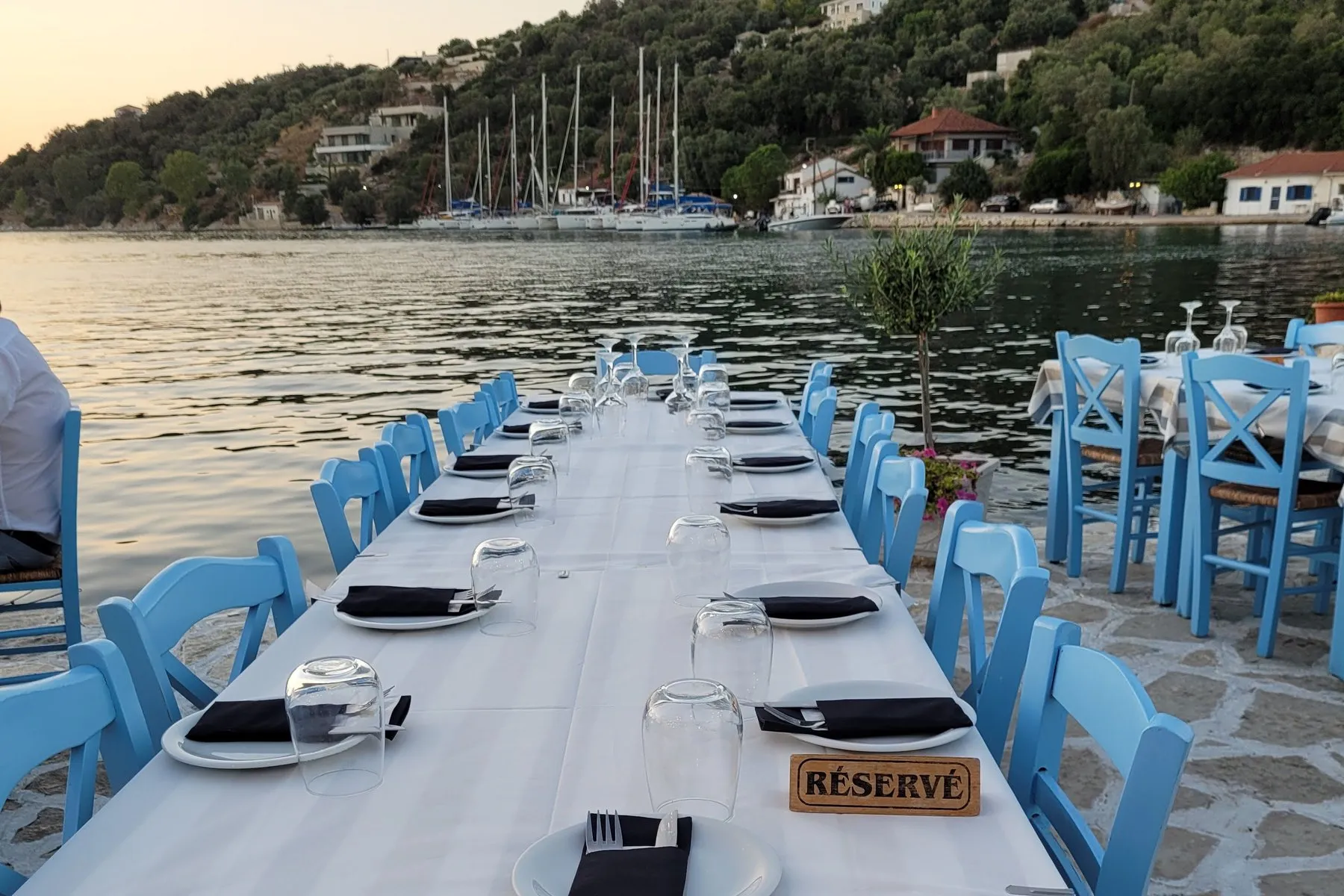
- Evening — showers, sunset, and a long dinner ashore.
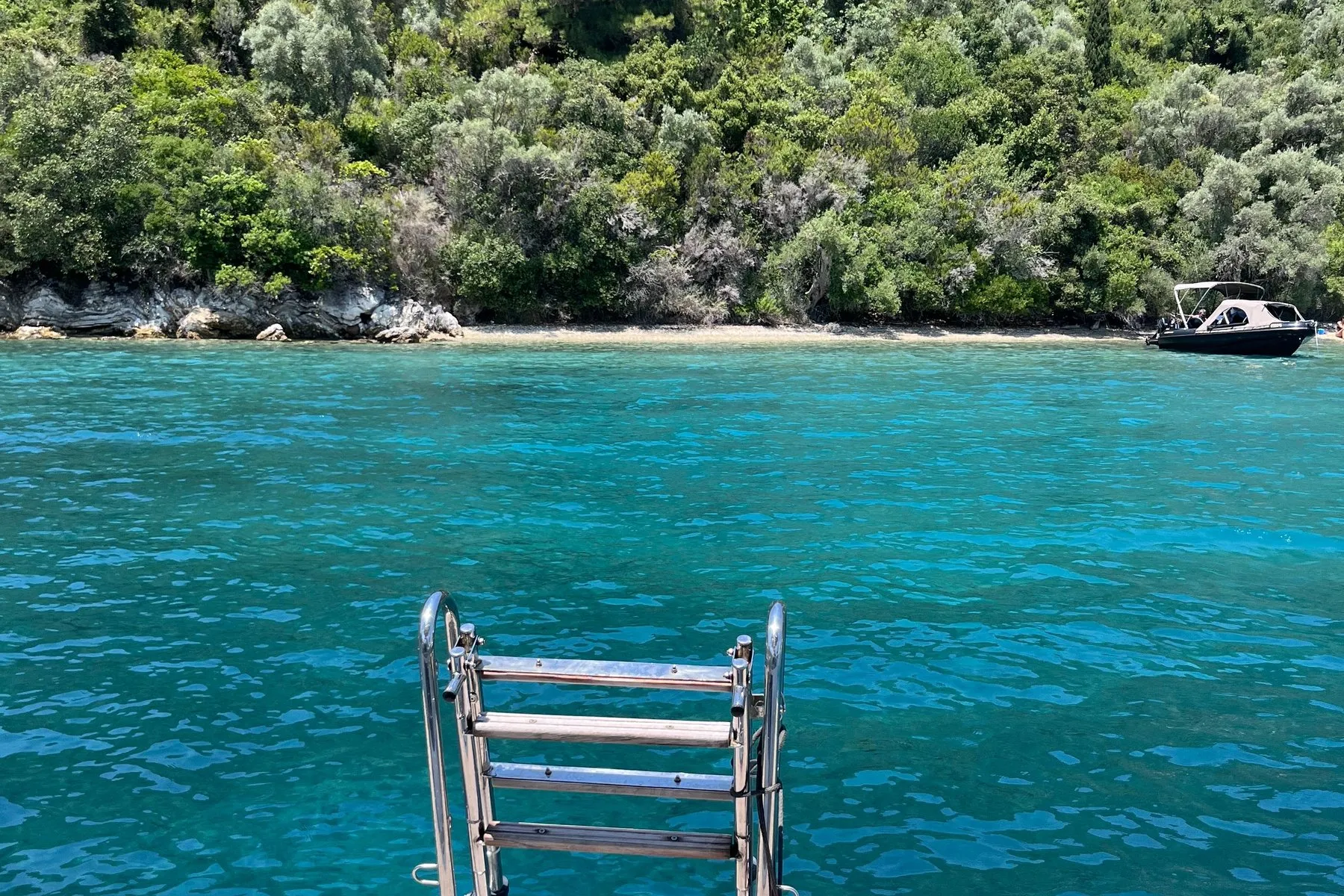
Two short legs rather than one long one is what makes the week feel restful. It is also why people describe Ionian sailing as relaxing and adventurous at the same time — the sailing is real, but nothing about the day is rushed.
Practical notes
Getting there. Fly to Preveza, then about 30 minutes by road. The floating bridge means no ferry.
Best months. May, June and September. July and August are hot, busy and require earlier starts. See the best time to sail in Greece for the month-by-month picture.
Route planning. A classic week runs Lefkas → Meganisi → Kalamos → Kastos → Ithaca → Sivota → Lefkas. The 7-day itinerary from Lefkada sets it out day by day, with distances and where to stop.
Skippered or bareboat. If nobody aboard has chartered before, a skipper is the difference between a holiday and a logistics exercise. If you are licensed and confident with mooring, bareboat gives you the run of the place.
Planning a week here
Tell us your dates, how many of you there are, and whether anyone aboard has sailed before. We will suggest a route that matches your crew rather than a template — and say so honestly if a different week would suit you better.
Frequently Asked Questions
-
Is sailing around Lefkada suitable for beginners?
Yes, and it is one of the reasons people start here. Distances between islands are short, most navigation is line of sight, and there is sheltered water almost everywhere inside the island chain. With a skipper aboard it suits a crew with no experience at all.
-
Where do most sailing trips from Lefkada start?
Lefkas Marina, a few minutes from Lefkada Town. It is well equipped for provisioning, and it lets you decide on the morning whether to head north or south depending on the wind.
-
Why is Lefkada easier to reach than other Greek islands?
A floating bridge connects it to the mainland, so there is no ferry. Most guests fly into Preveza, about 30 minutes away by road.
-
Which islands are best for island-hopping from Lefkada?
Meganisi, Kalamos and Kastos are the classic short hops — coves, quiet anchorages and a slower feel. Ithaca and Kefalonia are longer legs and suit a full week.
-
Is Porto Katsiki accessible by boat?
Yes, and arriving by boat is a completely different experience from the road above it. It is exposed, so it is a swim stop rather than an overnight anchorage.
-
How do you choose between a port night and an anchorage?
Most crews mix the two. A port gives you showers, a taverna and shore power; an anchorage gives you quiet and a swim off the back of the boat before breakfast. Alternating them keeps a week comfortable.
-
What is the best month to sail around Lefkada?
May, June and September. The sea is warm, the weather is settled and the bays are far less crowded than in July and August.
-
How far can you sail from Lefkada in a week?
A comfortable week covers the southern Ionian loop — Meganisi, Kalamos, Kastos, Ithaca and back. Corfu and Antipaxos to the north are possible but suit longer charters.